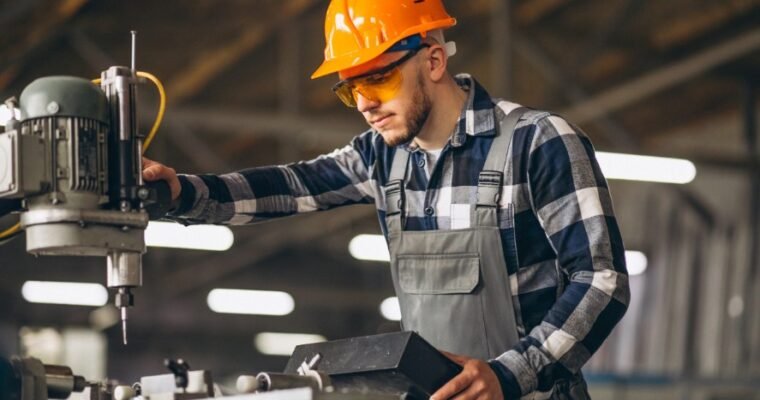
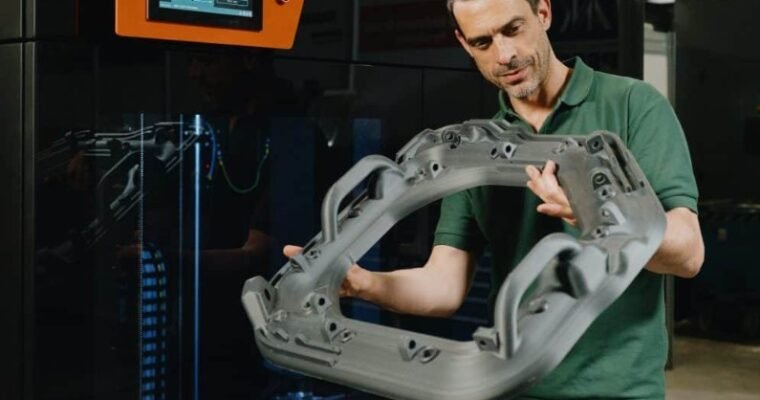
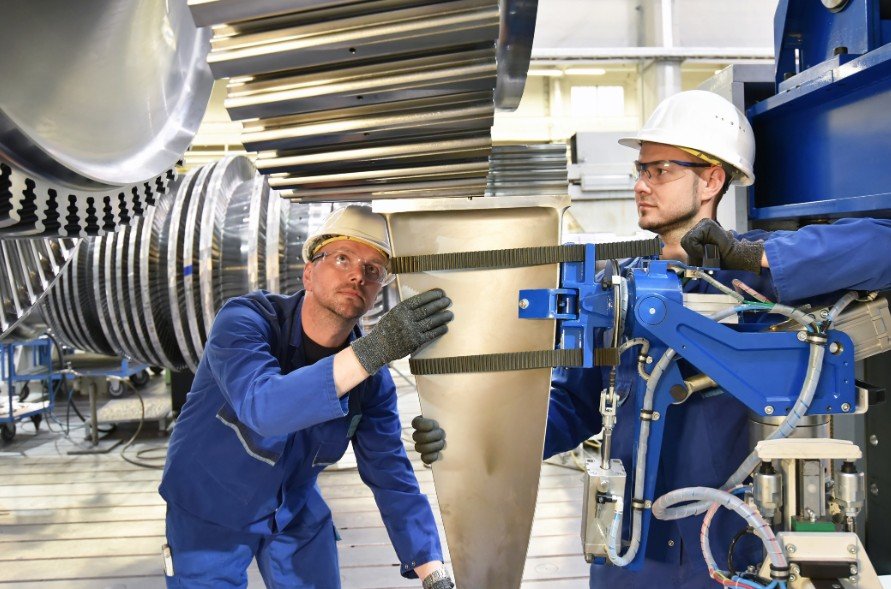
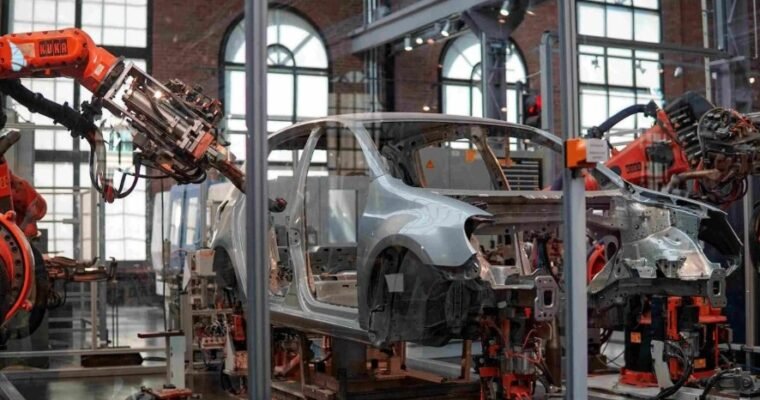
If you’re researching manufacturing vs. mechanical engineering, the biggest difference is what each discipline aims to accomplish. Manufacturing engineering focuses on how products are made efficiently, consistently, and cost-effectively. Mechanical engineering focuses more broadly on designing, analyzing, developing, and testing mechanical systems and devices.
Both careers offer opportunities in industries such as automotive manufacturing, aerospace, robotics, energy, and industrial equipment. However, the best choice depends on whether you prefer improving production processes or designing and developing mechanical products.
What Is Manufacturing Engineering?
Manufacturing engineering is the branch of engineering concerned with the processes, equipment, systems, and methods used to produce goods.
Manufacturing engineers work to make production operations more efficient while maintaining product quality and workplace safety. They evaluate manufacturing methods, select equipment, improve workflows, and troubleshoot production problems.
For example, imagine a company wants to manufacture thousands of metal brackets for an automotive assembly line. A manufacturing engineer determines how the brackets should be produced, which machines and tools are required, how workers or robots will handle the parts, and how quality will be checked throughout production.
The engineer may also analyze cycle times, identify production bottlenecks, and find ways to reduce material waste.
Main Responsibilities of a Manufacturing Engineer
Typical responsibilities include:
-
Developing and optimizing manufacturing processes.
-
Selecting production machinery, tooling, and equipment.
-
Improving production efficiency and reducing operating costs.
-
Monitoring quality metrics and investigating defects.
-
Implementing automation and robotics.
-
Applying lean manufacturing and continuous improvement methods.
-
Developing production layouts and standardized work instructions.
-
Supporting equipment installation and new product launches.
Manufacturing engineers often collaborate with production operators, maintenance technicians, quality engineers, industrial engineers, and product designers.
Their work combines engineering knowledge with practical factory operations.
What Is Mechanical Engineering?
Mechanical engineering is a broad engineering discipline focused on designing, analyzing, developing, and testing mechanical systems.
Mechanical engineers use principles of physics, mechanics, thermodynamics, fluid dynamics, and materials science to solve technical problems. Their work can involve individual components, complete machines, energy systems, and moving mechanical assemblies.
For example, a mechanical engineer developing an industrial pump might calculate fluid flow, select suitable materials, design the impeller and housing, evaluate mechanical stresses, and test the pump’s performance.
The engineer needs to ensure that the design meets its performance requirements and operates reliably under expected conditions.
Main Responsibilities of a Mechanical Engineer
Common responsibilities include:
-
Designing mechanical components and assemblies.
-
Creating 3D models and engineering drawings.
-
Performing stress, vibration, thermal, and motion analyses.
-
Developing machines, tools, and mechanical systems.
-
Selecting materials and mechanical components.
-
Testing prototypes and validating designs.
-
Improving equipment performance and reliability.
-
Supporting product development and technical troubleshooting.
Mechanical engineers work in manufacturing, aerospace, automotive, energy, HVAC, robotics, medical equipment, and many other sectors.
Because the field is broad, two mechanical engineers can have very different daily responsibilities depending on their specializations.
Manufacturing vs. Mechanical Engineering: Key Differences
The following comparison highlights how the two disciplines differ in their primary focus, responsibilities, and work environments.
| Category |
Manufacturing engineering |
Mechanical engineering |
| Primary focus |
How products are manufactured |
How mechanical products and systems are designed and function |
| Main objective |
Improve production efficiency, quality, and cost |
Develop safe, reliable, and effective mechanical designs |
| Typical work |
Process planning, tooling, production improvement, automation |
Product design, simulation, mechanical analysis, testing |
| Common tools |
CAD/CAM, production data systems, SPC, PLCs, process simulation |
CAD, FEA, CFD, simulation and engineering analysis software |
| Main environment |
Factories, production lines, engineering offices |
Design offices, laboratories, factories, testing facilities |
| Common challenges |
Production delays, defects, waste, process variation |
Design failures, stress limits, vibration, heat, performance |
| Typical deliverables |
Production processes, work instructions, tooling plans, process improvements |
Components, assemblies, technical drawings, validated designs |
| Career direction |
Manufacturing engineering, process engineering, operations |
Mechanical design, product development, thermal systems, analysis |
These distinctions are general rather than absolute. Manufacturing engineers also design fixtures and equipment, while mechanical engineers can work directly on production lines.
Manufacturing Engineering vs. Mechanical Engineering: An Example
Consider a company that wants to develop and manufacture a new electric vehicle motor.
Mobile Equipment Electrification & Hybrid Systems
Mechanical engineer: Designs the motor
The mechanical engineer develops the motor’s housing and mechanical components, evaluates heat transfer and vibration, selects appropriate materials, and checks whether the design meets performance requirements.
KTM production to restart in Europe from end of July
Manufacturing engineer: Develops the production process
The manufacturing engineer determines how the motor will be assembled, selects equipment and fixtures, establishes quality checks, and improves production speed while controlling costs.
Both engineers contribute to the same product, but they approach the problem from different perspectives.
The mechanical engineer asks, “How can we design a motor that performs reliably?”
The manufacturing engineer asks, “How can we produce that motor reliably, efficiently, and at the required volume?”
Their collaboration is essential because a product must not only work well but also be practical to manufacture.
Education Requirements
Manufacturing and mechanical engineering degrees share a substantial technical foundation. Students in both disciplines typically study mathematics, physics, engineering materials, design, and computer-aided engineering.
However, their specialized coursework may differ.
Manufacturing Engineering Education
Manufacturing engineering programs often emphasize:
-
Manufacturing processes and production systems.
-
Computer-aided manufacturing (CAM).
-
Automation and industrial robotics.
-
Quality engineering and statistical process control.
-
Lean manufacturing and operations improvement.
-
Tooling, machining, and process planning.
-
Production systems and manufacturing economics.
These subjects prepare students to develop and improve the systems used to manufacture products.
Mechanical Engineering Education
Mechanical engineering programs commonly emphasize:
-
-
-
Thermodynamics and heat transfer.
-
-
Mechanical design and machine elements.
-
CAD and engineering simulation.
-
Vibration, control systems, and system dynamics.
Depending on the university, students may also specialize in robotics, energy systems, automotive engineering, aerospace, or product development.
Which Degree Is More Flexible?
Mechanical engineering is often considered the broader degree because it can lead to careers in design, analysis, testing, energy, and manufacturing.
Manufacturing engineering offers a more direct focus on production systems and industrial processes.
However, neither degree automatically limits you to one career path. Mechanical engineering graduates can become manufacturing engineers, and manufacturing engineering graduates can move into design or other technical roles when their skills and experience align with the position.
Employers’ degree requirements vary by industry and job level.
Skills Needed for Each Career
Both careers require analytical thinking, technical communication, and the ability to solve complex problems. The emphasis on particular skills differs.
Skills for Manufacturing Engineers
Manufacturing engineers benefit from practical knowledge of production processes, quality systems, automation, and operational efficiency.
Important skills include:
-
Process improvement: Identifying bottlenecks and reducing waste.
-
Quality control: Using statistical methods and root cause analysis to reduce defects.
-
Production planning: Developing efficient workflows and process sequences.
-
Automation: Understanding robotics, sensors, PLCs, and automated equipment.
-
Data analysis: Evaluating cycle time, downtime, scrap rate, and production output.
-
CAD/CAM: Supporting tooling design, machining, and production preparation.
-
Communication: Coordinating improvements with production, maintenance, and quality teams.
For example, a manufacturing engineer might use production data to discover why a machine consistently misses its output target and then redesign the workflow to reduce delays.
Skills for Mechanical Engineers
Mechanical engineers need a strong understanding of mechanical behavior, design methods, and physical systems.
Important skills include:
-
Mechanical design: Developing components and assemblies that meet functional requirements.
-
CAD modeling: Creating 3D models and engineering drawings.
-
Engineering analysis: Evaluating stress, temperature, vibration, and fluid behavior.
-
Materials selection: Choosing materials based on strength, weight, durability, and operating conditions.
-
Testing and validation: Checking whether designs perform as expected.
-
Simulation: Using tools such as finite element analysis (FEA) or computational fluid dynamics (CFD), where appropriate.
-
Technical problem-solving: Identifying design weaknesses and developing workable solutions.
For example, a mechanical engineer may use simulation software to investigate why a machine component experiences excessive stress and redesign it to improve reliability.
Salary Comparison: Which Career Pays More?
There is no universal winner when it comes to salary. Earnings depend on location, experience, industry, qualifications, and responsibilities.
In the United States, mechanical engineering has a distinct occupational category in Bureau of Labor Statistics data, while manufacturing engineering roles may be classified differently depending on their actual duties. This makes direct salary comparisons less straightforward than simply comparing job titles.
Compensation can also vary considerably between entry-level engineers, senior technical specialists, engineering managers, and professionals working in highly specialized industries.
Factors that can influence salary include:
-
Industry: Aerospace, semiconductor manufacturing, automotive, energy, and advanced manufacturing can have different pay structures.
-
Experience: Senior engineers who lead projects or manage complex systems often earn more than entry-level employees.
-
Technical specialization: Skills in automation, robotics, simulation, advanced materials, and data-driven manufacturing can improve career opportunities.
-
Location: Local labor demand and cost of living affect compensation.
-
Leadership responsibilities: Engineering managers and manufacturing operations leaders may earn more because of their broader responsibilities.
If you’re comparing these careers in Indonesia, check current vacancies and salary information for your target city and industry. The responsibilities listed in a job description are often more informative than the title alone.
Career Opportunities in Manufacturing Engineering
Manufacturing engineering can lead to several career paths, particularly for people who enjoy production technology and continuous improvement.
Potential roles include:
-
-
-
-
Manufacturing automation engineer.
-
Industrialization engineer.
-
Manufacturing quality engineer.
-
Advanced manufacturing engineer.
-
Manufacturing engineering manager.
With experience, professionals may move into production management, factory operations, process development, or technical leadership.
Industries include automotive assembly, electronics, industrial machinery, consumer goods, medical devices, aerospace, and semiconductor production.
A manufacturing engineering career can be especially attractive if you enjoy seeing tangible improvements in how products are made.
Career Opportunities in Mechanical Engineering
Mechanical engineering provides access to a broad range of technical specialties.
Potential roles include:
-
Mechanical design engineer.
-
Product development engineer.
-
Mechanical systems engineer.
-
Thermal or HVAC engineer.
-
-
-
Simulation or FEA engineer.
-
Maintenance or reliability engineer.
-
Research and development engineer.
Mechanical engineers can also move into manufacturing engineering, project management, technical consulting, and engineering leadership.
The range of career options can be useful if you’re interested in exploring different industries throughout your professional life.
Advantages and Disadvantages of Each Field
Manufacturing Engineering
Advantages
-
Direct involvement in production and industrial technology.
-
Opportunities to improve real-world processes and product quality.
-
Exposure to automation, robotics, and modern manufacturing systems.
-
Clear pathways into production leadership and operations management.
-
Opportunities to work across a wide variety of manufacturing industries.
Potential disadvantages
-
Some roles require frequent time on the factory floor.
-
Production problems may need immediate attention.
-
Engineers may face pressure to meet output, quality, and cost targets simultaneously.
-
Work schedules can depend on shift operations, equipment installations, or production demands.
Mechanical Engineering
Advantages
-
Broad technical applications across many industries.
-
Opportunities in design, simulation, testing, and research.
-
Strong foundations in mechanics, materials, and physical systems.
-
Potential to specialize in emerging fields such as robotics, electrification, and advanced energy systems.
Potential disadvantages
-
Some design roles involve long periods of computer-based work.
-
Product development can involve lengthy testing and validation cycles.
-
Design decisions must balance performance, safety, cost, and manufacturing constraints.
-
Certain specialties require advanced technical training or substantial experience with simulation tools.
Neither career is inherently better. The right choice depends on the type of work you find satisfying and the environment in which you prefer to work.
Manufacturing vs. Mechanical Engineering: Which Is Better for You?
The simplest way to choose is to consider what you would prefer to work on every day.
Choose manufacturing engineering if you enjoy…
-
Improving production speed and efficiency.
-
Working with machines, automation, and manufacturing equipment.
-
Solving quality problems and reducing production waste.
-
Collaborating with operators and technicians on practical improvements.
-
Seeing measurable results in factory performance.
Choose mechanical engineering if you enjoy…
-
Designing machines, products, and mechanical components.
-
Understanding how forces, heat, motion, and materials affect performance.
-
Using CAD and simulation tools to develop new designs.
-
Testing prototypes and investigating mechanical failures.
-
Exploring different technical industries and specializations.
If you enjoy both design and production, you do not necessarily have to choose one discipline permanently. Many engineering careers combine these areas, and experience in one can be valuable in the other.
Can Manufacturing Engineers and Mechanical Engineers Do the Same Job?
Yes, in some cases. The amount of overlap depends on the company, the product, and the job description.
A manufacturing engineer may design a custom fixture, develop a machining process, or help modify equipment. A mechanical engineer may investigate production defects, improve assembly methods, or support manufacturing operations.
Smaller companies may assign both types of work to the same engineer, while larger organizations often divide responsibilities among specialized teams.
Both engineers also need to understand how design decisions affect production. A mechanically sound component may be difficult or expensive to manufacture, while an efficient manufacturing process cannot compensate for a fundamentally flawed product design.
The strongest results often come from collaboration between the two disciplines.
Frequently Asked Questions
Is manufacturing engineering easier than mechanical engineering?
Neither discipline is universally easier. Manufacturing engineering emphasizes production systems, process optimization, and quality, while mechanical engineering often involves deeper analysis of mechanical systems, thermodynamics, and component design. The difficulty depends on your strengths and the specialization you choose.
Can a mechanical engineer work as a manufacturing engineer?
Yes. Mechanical engineering graduates commonly qualify for manufacturing engineering positions, particularly when they have relevant experience in production processes, CAD/CAM, quality control, automation, or continuous improvement.
Is manufacturing engineering a branch of mechanical engineering?
Manufacturing engineering is a distinct engineering discipline that overlaps substantially with mechanical engineering. Some universities offer separate manufacturing engineering degrees, while others incorporate manufacturing subjects into mechanical engineering programs.
Which field is better for robotics?
Both can lead to robotics careers. Mechanical engineers may focus on robot structures, mechanisms, actuators, and mechanical design. Manufacturing engineers may focus on integrating robots into production lines, automating tasks, and improving manufacturing performance. Electrical, electronics, and controls engineering are also important in robotics.
Which career is better for working in a factory?
Manufacturing engineering is generally the more direct fit for factory-based process improvement, production equipment, and manufacturing operations. However, mechanical engineers also work in factories, especially in equipment design, maintenance, reliability, and technical support.
Final Thoughts
The difference between manufacturing and mechanical engineering comes down to their primary focus. Manufacturing engineering concentrates on how products are made, while mechanical engineering concentrates on how mechanical products and systems are designed and function.
Manufacturing engineering is a strong option for people who enjoy production processes, automation, quality improvement, and factory operations. Mechanical engineering may be a better fit for people who enjoy mechanical design, physical analysis, product development, and a wider range of technical applications.
Both disciplines offer valuable skills and long-term career opportunities. Before choosing a degree or job, compare the coursework, technical responsibilities, industry opportunities, and daily work associated with each path. That will help you choose the field that best matches your interests and professional goals.