Manufacturing vs. Fabrication: Key Differences, Processes, and Applications
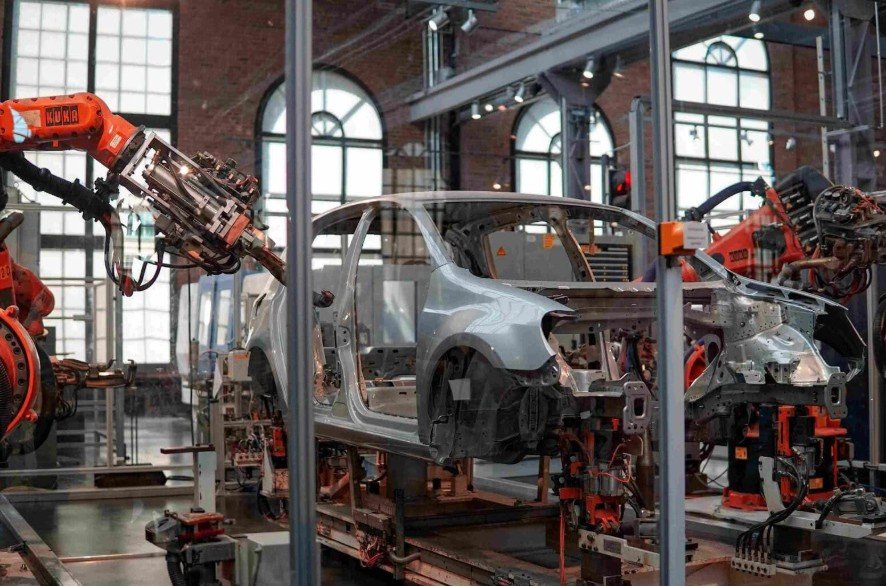
In simple terms, manufacturing is the broader process of producing goods, while fabrication focuses on creating parts or structures by cutting, shaping, joining, or assembling materials. Fabrication is often one part of a larger manufacturing operation.
For example, a company producing industrial machinery may use fabrication to cut and weld steel frames. Manufacturing encompasses the entire process, including sourcing materials, producing components, assembling the machine, inspecting its quality, and preparing it for delivery.
Both processes are essential in industries such as construction, automotive production, aerospace, electronics, and industrial equipment. However, their methods, equipment, and applications can vary significantly.
What Is Manufacturing?
Manufacturing is the process of transforming raw materials, components, or partially finished goods into finished products that can be sold or used in other operations.
Manufacturing can involve several production methods, including machining, molding, casting, forging, fabrication, assembly, and additive manufacturing. The method selected depends on the product’s design, materials, production volume, and quality requirements.
Manufacturers typically coordinate multiple stages of production to ensure that products meet specifications and are produced efficiently.
Common Manufacturing Processes
Manufacturing includes a wide range of processes that transform materials into usable products.
-
Machining: Removing material from a workpiece using equipment such as CNC mills, lathes, and drilling machines.
-
Casting: Pouring liquid material into a mold and allowing it to solidify into a desired shape.
-
Molding: Forming materials such as plastics or rubber inside a mold.
-
Forging: Shaping metal through compressive forces.
-
Fabrication: Cutting, bending, welding, and joining materials to create parts or structures.
-
Assembly: Combining components into a completed product.
-
Additive manufacturing: Building parts layer by layer through technologies such as 3D printing.
Not every manufacturing operation uses all these processes. A company producing plastic containers, for instance, may rely heavily on injection molding, while an automotive manufacturer may combine stamping, machining, welding, painting, and assembly.
Examples of Manufacturing
Manufacturing covers a wide range of industries and products.
Automotive manufacturing
Vehicles are produced through coordinated processes involving metal stamping, component machining, welding, painting, electronics installation, and final assembly.
Electronics manufacturing
Electronic components and circuit boards are produced and assembled using processes such as soldering, automated component placement, testing, and inspection.
Plastic product manufacturing
Manufacturers use injection molding, extrusion, or other processes to produce items such as containers, housings, fittings, and consumer products.
Manufacturing is generally concerned with the entire production system, from material selection to the finished product. It also includes production planning, quality assurance, inventory management, and process improvement.
What Is Fabrication?
Fabrication is a production process that involves creating parts, components, or structures from raw or semi-finished materials. It is especially common in metalworking, although fabrication can also involve plastics and other materials.
Fabrication frequently includes cutting, bending, forming, welding, and joining individual pieces to achieve a required shape or structure.
For example, a metal fabrication shop may receive steel sheets and structural tubing, cut them to size, bend certain sections, weld the pieces together, and finish the resulting frame.
The finished frame might then become part of a larger product manufactured by another company.
Common Fabrication Processes
Fabrication methods depend on the material, design, and intended application.
1. Cutting
Cutting separates material into specific dimensions. Common methods include laser cutting, plasma cutting, waterjet cutting, shearing, and sawing.
2. Bending and forming
These processes change a material’s shape without necessarily separating it into multiple pieces. Sheet metal bending, press braking, and roll forming are common examples.
3. Welding
Welding joins materials by applying heat, pressure, or both. It is widely used to create frames, brackets, tanks, pipelines, and structural assemblies.
4. Machining
Fabricators may use drilling, milling, grinding, or other machining operations to achieve the necessary dimensions and features.
5. Fastening and assembly
Bolts, rivets, screws, and other fastening methods can join components when welding is unsuitable or when future disassembly is necessary.
6. Surface finishing
Painting, powder coating, polishing, and protective treatments can improve appearance, corrosion resistance, or durability.
Examples of Fabrication
Structural steel fabrication
Fabricators cut, drill, fit, and weld steel beams, columns, brackets, and frames for buildings, industrial facilities, and infrastructure projects.
Sheet metal fabrication
Flat sheets are cut, punched, bent, and joined to create enclosures, cabinets, machine covers, panels, and equipment housings.
Tank and vessel fabrication
Metal plates and formed sections are assembled and welded to produce tanks, hoppers, and other industrial vessels according to the applicable design and safety requirements.
Fabrication often emphasizes the physical creation of a component or structure. Depending on the job, the fabricator may work from engineering drawings, CAD models, material specifications, and welding procedures.
Manufacturing vs. Fabrication: Key Differences
The main difference is the scope of work. Manufacturing covers a broad production system, while fabrication is a more specific set of processes used to create parts or structures.
| Category | Manufacturing | Fabrication |
|---|---|---|
| Definition | Broad process of producing finished goods | Process of creating parts or structures from materials |
| Scope | May cover the entire production lifecycle | Often focuses on forming, cutting, joining, and finishing components |
| Common methods | Molding, casting, machining, fabrication, assembly, 3D printing | Cutting, bending, welding, forming, fastening |
| Materials | Metals, plastics, ceramics, composites, and more | Frequently metals, but may include plastics and other materials |
| Typical output | Finished products or components | Fabricated parts, frames, structures, or assemblies |
| Equipment | Production lines, molds, CNC machines, robots, assembly systems | Welding equipment, laser cutters, press brakes, shears, forming tools |
| Production volume | One-off items to mass production | Custom jobs, project-based work, and production batches |
| Quality focus | Product performance, consistency, and overall production quality | Dimensional accuracy, joint integrity, fit, finish, and structural requirements |
These categories overlap. Fabrication can be a standalone business, a manufacturing department, or a service provided by a specialist supplier.
How Manufacturing and Fabrication Work Together
Manufacturing and fabrication frequently operate as connected stages of the same production process.
Consider a company that produces industrial conveyor systems. The company needs a steel frame, rollers, motors, electrical controls, and protective covers to complete the system.
A typical workflow might look like this:
1. Engineering and design
Create drawings, dimensions, material specifications, and production requirements.
2. Material preparation and fabrication
Cut, bend, drill, and weld steel parts to create the conveyor frame and brackets.
3. Component production and procurement
Produce or source rollers, shafts, motor mounts, motors, and control components.
4. Manufacturing assembly
Combine fabricated parts and purchased components into a complete conveyor system.
5. Inspection and testing
Verify dimensions, alignment, mechanical operation, and applicable safety requirements.
In this example, fabrication produces the steel frame and related components. Manufacturing coordinates the broader process, including component production, assembly, testing, and delivery.
The distinction is useful because a company can outsource fabrication to a specialist while retaining responsibility for the final product’s manufacturing process.
Which Industries Use Manufacturing and Fabrication?
Both activities are common across industrial sectors, but their importance varies depending on the products being made.
Automotive Industry
Automotive manufacturing involves stamping body panels, machining engine components, assembling electrical systems, and installing vehicle interiors.
Fabrication is particularly relevant to chassis components, exhaust systems, brackets, frames, and custom metal parts. These components are then incorporated into larger manufacturing operations.
Construction and Infrastructure
Manufacturing supplies products such as electrical equipment, construction materials, mechanical systems, and prefabricated building components.
Fabrication is essential for creating structural steel members, metal stairs, handrails, supports, ductwork, and custom architectural features.
Aerospace Industry
Aerospace manufacturing includes machining precision components, producing composite structures, assembling aircraft systems, and conducting extensive quality testing.
Fabrication may involve specialized sheet metal forming, precision joining, and the production of structural assemblies. Strict material traceability and inspection requirements are especially important.
Industrial Machinery
Manufacturers produce complete machines, pumps, compressors, conveyors, and processing equipment.
Fabrication shops often create the supporting frames, machine guards, mounting plates, tanks, and structural assemblies required for these products.
Energy and Utilities
The energy sector uses manufacturing to produce turbines, electrical equipment, pumps, and other machinery.
Fabrication supports the production of pipelines, steel supports, pressure vessels, and other structures. The work may require specialized welding procedures, nondestructive testing, and compliance with industry codes.
Manufacturing vs. Fabrication Costs
The cost of manufacturing or fabrication depends on the complexity of the product, materials, labor, equipment, quantity, and quality requirements.
However, the cost structures can differ because manufacturing may involve a broader range of activities.
What Affects Manufacturing Costs?
Manufacturing expenses can include:
-
Raw materials and purchased components.
-
Equipment, tooling, and machinery.
-
Direct labor and production supervision.
-
Factory overhead and energy consumption.
-
Quality control, testing, and inspection.
-
Packaging, storage, and logistics.
High-volume production may reduce the cost per unit when setup costs and tooling investments are spread across many products.
What Affects Fabrication Costs?
Fabrication costs commonly depend on:
-
Material type, thickness, grade, and quantity.
-
Cutting time and material waste.
-
Bending, forming, and machining requirements.
-
Welding time and joint complexity.
-
Finishing and protective coatings.
-
Dimensional tolerances and inspection requirements.
For example, a simple steel bracket may require only a few cutting and bending operations. A large welded frame with tight dimensional tolerances may require specialized fixtures, multiple welding stages, and extensive inspection.
Which Is Cheaper?
Neither manufacturing nor fabrication is automatically cheaper because they are not always alternative methods for the same task.
If you need a custom steel frame, a fabrication shop may be the most direct supplier. If you need a complete machine containing the frame, motors, controls, and finished assemblies, a manufacturing company may be better suited to deliver the final product.
For a fair comparison, evaluate the total cost of the required output, including material, labor, finishing, testing, transportation, and any additional assembly work.
Manufacturing vs. Fabrication Equipment
The machinery used in each field depends on the production method and material.
Manufacturing equipment
May include CNC machining centers, injection molding machines, casting equipment, industrial robots, assembly lines, automated inspection systems, and 3D printers
Fabrication equipment
Commonly includes laser and plasma cutters, shearing machines, press brakes, welding machines, rollers, punching machines, and metal finishing equipment.
Some machines appear in both environments. CNC machining, for instance, can be part of a manufacturing line or a fabrication shop’s service offering.
The important distinction is how the equipment contributes to the production workflow, not simply the machine’s name.
Manufacturing vs. Fabrication Jobs and Careers
Both fields offer career opportunities for people with technical, engineering, and practical skills.
Manufacturing Careers
Manufacturing-related job titles include:
-
Manufacturing engineer.
-
Production engineer.
-
Process engineer.
-
Production supervisor.
-
Quality engineer.
-
CNC manufacturing technician.
-
Manufacturing operations manager.
These professionals may work on production planning, process optimization, automation, quality assurance, or factory management.
Fabrication Careers
Fabrication-related job titles include:
-
Metal fabricator.
-
Welder.
-
Sheet metal worker.
-
Fabrication technician.
-
CNC cutting machine operator.
-
Fabrication supervisor.
-
Welding engineer.
Fabrication roles can involve hands-on material processing, welding, technical drawing interpretation, machine operation, and dimensional inspection.
Engineering roles may require a relevant degree, while skilled trade positions often emphasize technical training, practical experience, and industry-recognized qualifications.
Which Career Should You Choose?
Manufacturing may be a better fit if you enjoy improving production systems, working with automation, analyzing operational data, or coordinating the creation of complete products.
Fabrication may be a better fit if you enjoy working directly with materials, interpreting engineering drawings, operating metalworking equipment, welding, or creating custom structures.
There is also a natural progression between the fields. Fabrication experience can be valuable for manufacturing engineers, production supervisors, and quality specialists because it provides practical insight into how components are made.
Frequently Asked Questions
Is fabrication part of manufacturing?
Yes. Fabrication is often one of the processes used within manufacturing. However, fabrication can also be performed independently by specialist shops that supply components to other companies.
Is fabrication the same as metalworking?
Not exactly. Metalworking is a broad category of processes used to shape or modify metals, including machining, casting, forging, and fabrication. Fabrication often emphasizes cutting, forming, and joining materials to create parts or structures.
Does fabrication include welding?
Yes. Welding is a common fabrication process used to join metal components. However, not all fabrication requires welding; some parts are created through cutting, bending, fastening, or other forming methods.
Can a fabrication shop manufacture finished products?
Yes. A fabrication shop may produce complete products, especially custom frames, enclosures, tanks, furniture, and structural assemblies. If it also handles design, sourcing, assembly, finishing, and testing, its operations may encompass a broader manufacturing process.
What is the difference between fabrication and assembly?
Fabrication creates or forms the parts that make up a product. Assembly combines individual components into a larger unit. In practice, a single business may perform both activities.
Final Thoughts
The difference between manufacturing and fabrication comes down to scope and purpose. Manufacturing is the broader process of producing goods, while fabrication focuses on creating parts and structures by cutting, forming, joining, and finishing materials.
Fabrication is often a critical stage within manufacturing, particularly in metalworking, construction, industrial machinery, and automotive production. Manufacturing, however, may extend far beyond fabrication to include component production, automation, assembly, quality assurance, and final product testing.
If you’re choosing a supplier or planning a production project, begin with the output you need. A custom metal frame may require a fabrication specialist, while a complete industrial machine may require a manufacturing partner capable of coordinating the entire production process. Understanding the difference helps you select the right expertise, control costs, and achieve the required quality.