What Does a Manufacturing Engineer Do? Roles, Responsibilities, and Career Opportunities
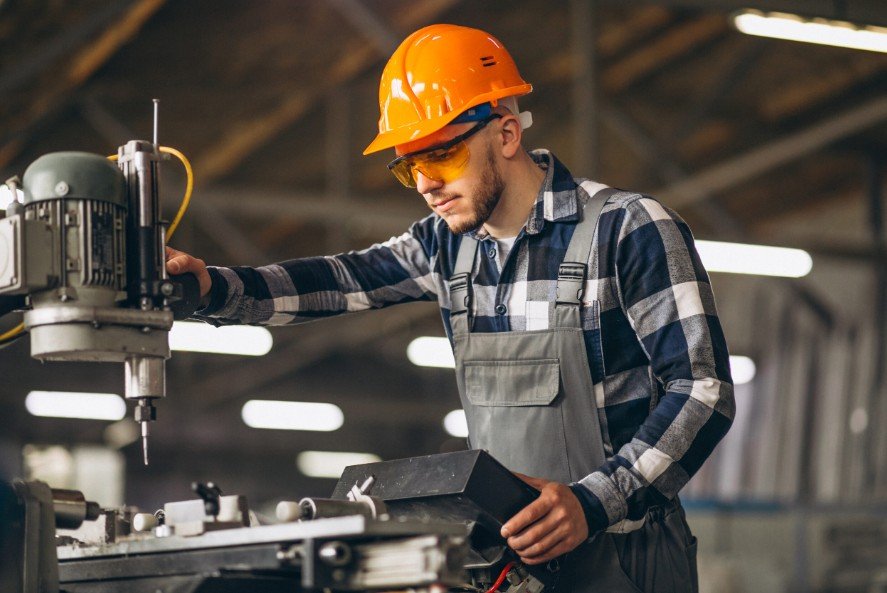
So, what does a manufacturing engineer do, exactly? A manufacturing engineer designs, develops, improves, and oversees the processes used to manufacture products. Their main goal is to help companies produce high-quality goods efficiently, safely, and cost-effectively. They work with machines, production systems, materials, automation technologies, and people to turn product designs into real, market-ready items.
Whether a company manufactures automobiles, electronics, medical devices, furniture, or industrial equipment, manufacturing engineers play an important role in keeping production operations productive and reliable.
What Is a Manufacturing Engineer?
A manufacturing engineer is an engineering professional who focuses on the methods, equipment, systems, and processes used to make products. Unlike a product design engineer, who primarily focuses on how a product should look and function, a manufacturing engineer concentrates on how that product can be produced consistently and efficiently.
For example, imagine a company wants to manufacture a new type of electric motor. The product design team creates the motor’s specifications, including its dimensions, materials, and performance requirements. The manufacturing engineer determines how to assemble the motor, which machines and tools are necessary, how production stations should be arranged, and how quality standards will be maintained.
This work requires a combination of technical knowledge, problem-solving skills, and practical experience with industrial operations.
Manufacturing engineers may work in small production facilities or large industrial plants. Their daily responsibilities depend on the company’s industry, production volume, equipment, and manufacturing technology.
Key Responsibilities of a Manufacturing Engineer
Manufacturing engineers handle several responsibilities throughout the production lifecycle. Some focus on developing new production processes, while others spend much of their time improving existing operations.
1. Designing and Improving Manufacturing Processes
One of the most important responsibilities of a manufacturing engineer is developing production processes that allow products to be manufactured efficiently.
This includes determining the sequence of production steps, selecting suitable equipment, defining operating procedures, and identifying opportunities to reduce waste.
For instance, a manufacturing engineer working in an automotive factory might analyze the process used to install vehicle components. If workers must repeatedly move heavy parts between stations, the engineer may redesign the workflow to reduce unnecessary movement and improve production speed.
The objective is not simply to make production faster. The process must also maintain product quality, protect workers, and meet required specifications.
2. Selecting Machines, Tools, and Equipment
Manufacturing engineers help determine which machines, tools, and production technologies a company needs.
Depending on the industry, this equipment might include CNC machining centers, industrial robots, injection molding machines, conveyor systems, welding equipment, or automated inspection tools.
Before recommending new equipment, an engineer typically considers several factors:
-
Production capacity and expected demand.
-
Equipment accuracy and repeatability.
-
Initial purchase and installation costs.
-
Maintenance requirements and operating expenses.
-
Compatibility with existing production systems.
-
Worker safety and applicable industry standards.
Choosing the right equipment can significantly affect a company’s long-term productivity. A machine that looks inexpensive initially may become costly if it requires frequent repairs or produces excessive defects.
3. Monitoring Production Efficiency
Manufacturing engineers regularly evaluate production performance to identify bottlenecks, delays, and other operational problems.
They may track metrics such as cycle time, production output, scrap rate, downtime, labor productivity, and overall equipment effectiveness (OEE).
Suppose a factory expects an assembly line to produce 500 units per shift but consistently produces only 420. A manufacturing engineer might investigate whether machine downtime, material shortages, long setup times, or inefficient work methods are responsible.
After identifying the main cause, the engineer can recommend changes and measure whether those changes improve performance.
This data-driven approach helps manufacturers make informed decisions rather than relying on assumptions.
4. Ensuring Product Quality
Product quality is another major part of manufacturing engineering. Engineers work with quality assurance teams to ensure that production processes consistently meet product specifications and customer requirements.
Their responsibilities may include developing inspection procedures, analyzing defects, establishing process controls, and investigating the root causes of quality problems.
For example, if a machining operation repeatedly produces metal parts with incorrect dimensions, a manufacturing engineer may examine tool wear, machine calibration, material properties, cutting parameters, and measurement methods.
The solution might involve adjusting machine settings, replacing worn tools, improving inspection procedures, or redesigning the process.
Preventing defects at their source is generally more effective than relying entirely on final inspections.
5. Troubleshooting Production Problems
Production environments rarely operate perfectly all the time. Machines can fail, processes can become unstable, and products may not meet their specifications.
Manufacturing engineers investigate these issues and work with technicians, operators, maintenance personnel, and quality specialists to resolve them.
Common problems include:
-
Unexpected machine downtime.
-
Inconsistent product dimensions.
-
Excessive material waste.
-
Slow production cycles.
-
Assembly errors.
-
Equipment alignment problems.
-
Recurring defects or rework.
Engineers often use structured problem-solving methods, such as the 5 Whys, fishbone diagrams, and failure mode and effects analysis (FMEA), to identify underlying causes.
The goal is to correct the problem while preventing it from happening again.
6. Implementing Automation and New Technologies
Modern manufacturing increasingly relies on automation, robotics, sensors, and computer-controlled equipment. Manufacturing engineers help introduce these technologies into production environments.
For example, an engineer might implement a robotic arm to handle repetitive material movement or install automated vision inspection to detect surface defects.
Automation can improve consistency, reduce repetitive manual work, and increase production capacity. However, it also requires careful planning, including equipment integration, safety assessments, employee training, and maintenance preparation.
Manufacturing engineers must determine whether a proposed technology offers meaningful benefits compared with its cost and complexity.
7. Reducing Manufacturing Costs
Companies need to produce goods at a cost that allows them to remain competitive. Manufacturing engineers help control expenses without sacrificing quality or safety.
They may analyze material consumption, energy usage, labor requirements, machine utilization, and production waste.
For example, if a factory discards a significant percentage of plastic components because of molding defects, an engineer may adjust process parameters or improve tooling to reduce the rejection rate.
Even small improvements can create substantial savings when a product is manufactured in large quantities.
Cost reduction may also involve simplifying assembly procedures, improving material handling, standardizing components, and reducing unnecessary production steps.
8. Supporting Worker Safety
Manufacturing engineers must consider employee safety when designing or improving production systems.
They may evaluate machine guarding, ergonomic workstation layouts, material handling procedures, emergency stops, and the risks associated with automated equipment.
A workstation that requires employees to bend repeatedly or lift heavy objects can contribute to discomfort and injury. An engineer might redesign the station, introduce lifting equipment, or reposition materials to make the task safer.
Safety improvements can also support productivity by reducing workplace disruptions and helping employees perform their tasks more comfortably.
What Does a Manufacturing Engineer Do on a Daily Basis?
A manufacturing engineer’s workday can vary significantly depending on the production environment. Some days involve analyzing production data at a computer, while others require hands-on troubleshooting on the factory floor.
Here is an example of what a typical workday might look like.
Morning: Review production performance
Check the previous shift’s output, quality reports, machine downtime, and production targets. Discuss urgent issues with supervisors and operators.
Late morning: Investigate process problems
Visit production lines, inspect equipment, observe work methods, and work with technicians to investigate recurring defects or bottlenecks.
Afternoon: Develop improvements
Analyze process data, update technical documentation, test new production settings, or prepare a proposal for equipment upgrades.
End of day: Coordinate with the team
Meet with quality, maintenance, production, and design teams to communicate findings, assign follow-up tasks, and review improvement results.
This schedule is only an example. Manufacturing engineers working on new product launches may spend more time on process development, while those in established factories may focus on equipment reliability and continuous improvement.
Manufacturing Engineer vs. Other Engineering Roles
Manufacturing engineering overlaps with several other engineering disciplines, but each role has a different primary focus.
| Engineering role | Main responsibility |
|---|---|
| Manufacturing engineer | Develops and improves the processes used to manufacture products. |
| Mechanical engineer | Designs and analyzes mechanical systems, components, and machines. |
| Industrial engineer | Improves the efficiency of broader systems involving people, materials, time, and resources. |
| Process engineer | Develops and optimizes specific production or transformation processes. |
| Quality engineer | Establishes and improves systems for meeting quality requirements. |
| Production engineer | Supports production operations, output targets, and process performance; duties often overlap with manufacturing engineering. |
These job titles are not always used consistently. In some companies, manufacturing engineers perform many of the same duties as process or production engineers.
The most important distinction is the actual job description, not just the title.
What Industries Employ Manufacturing Engineers?
Manufacturing engineers are needed in many industries because nearly every physical product requires a reliable production process.
Automotive manufacturing
Engineers improve vehicle assembly lines, machining operations, welding processes, robotic systems, and quality control. They may work on engines, transmissions, electric vehicle components, or vehicle interiors.
Electronics manufacturing
Engineers help optimize circuit board assembly, soldering, component placement, testing, and automated inspection.
Precision Medical Device Manufacturing | Fenix
Medical devices and healthcare products
Engineers develop controlled manufacturing processes for products such as diagnostic equipment, surgical instruments, and medical components. Documentation, traceability, and regulatory compliance are particularly important.
Tool Line Endüstriyel Çözümler
Industrial machinery and metal fabrication
Engineers improve machining, cutting, welding, assembly, tooling, and dimensional inspection processes.
Food & Beverage Pumps | Hygienic Transfer Solutions
Food and consumer goods
Engineers work on packaging systems, filling equipment, material flow, sanitation-friendly equipment design, and high-volume production efficiency.
Other employment opportunities exist in aerospace, pharmaceuticals, plastics, textiles, furniture, renewable energy, and semiconductor manufacturing.
What Skills Does a Manufacturing Engineer Need?
Successful manufacturing engineers combine engineering fundamentals with analytical thinking, communication, and practical problem-solving.
Technical and Engineering Skills
Common technical skills include:
-
CAD software: Tools such as SolidWorks, AutoCAD, or similar programs help engineers review part designs, tooling, and production layouts.
-
Manufacturing processes: Knowledge of machining, casting, welding, molding, fabrication, and assembly helps engineers select suitable production methods.
-
Automation and robotics: Familiarity with industrial robots, sensors, programmable logic controllers (PLCs), and automated equipment is valuable in modern factories.
-
Quality control: Understanding statistical process control (SPC), measurement systems, root cause analysis, and FMEA supports consistent production.
-
Data analysis: Spreadsheet tools and statistical methods help engineers interpret production data and evaluate process improvements.
-
Lean manufacturing: Methods such as 5S, value stream mapping, and standardized work help reduce waste and improve workflow.
Engineers do not necessarily need to master every technology. The required skills depend on their industry, specialization, and level of responsibility.
Problem-Solving and Analytical Thinking
Manufacturing engineers must understand why a process is failing rather than simply treating its visible symptoms.
For example, if a machine produces defective parts, replacing a component may temporarily solve the issue. However, a more thorough investigation could reveal that the real cause is incorrect setup procedures or inconsistent incoming materials.
Analytical thinking helps engineers compare possible solutions, evaluate evidence, and choose changes that address the root cause.
Communication and Teamwork
Manufacturing engineers work closely with people who have different technical backgrounds and priorities.
Production operators understand practical challenges on the line. Maintenance technicians know the equipment’s service history. Quality engineers understand inspection results and customer requirements. Managers focus on production targets, costs, and delivery schedules.
A good manufacturing engineer listens to these perspectives and communicates technical information clearly so the entire team can work toward a common goal.
How to Become a Manufacturing Engineer
If you’re interested in pursuing this career, there are several steps that can help you prepare.
1. Earn a Relevant Engineering Degree
Many manufacturing engineer positions require a bachelor’s degree in manufacturing engineering, mechanical engineering, industrial engineering, or a related field.
Coursework commonly includes materials science, engineering design, manufacturing processes, automation, statistics, and quality engineering.
Some employers also consider candidates with relevant technical degrees, vocational training, or extensive manufacturing experience, depending on the position.
2. Gain Practical Experience
Internships, industrial placements, and hands-on projects can help you understand how manufacturing systems operate outside the classroom.
Useful experience includes working with CNC machines, creating CAD models, analyzing production data, designing fixtures, or participating in a process improvement project.
Even a small project can demonstrate your ability to solve practical engineering problems. For instance, you might measure the cycle time of a simulated assembly process, identify unnecessary steps, and calculate the improvement after redesigning the workflow.
3. Learn Industry-Relevant Software
Start with tools that match the type of manufacturing you want to enter.
CAD software is useful for design and tooling work. Excel or other data-analysis tools help with production reporting. Simulation software can support process planning, while familiarity with PLCs and industrial automation is beneficial in highly automated facilities.
Learning the fundamentals first is often more useful than trying to master every available program.
4. Understand Quality and Continuous Improvement
Study basic quality management, lean manufacturing, statistical process control, and root cause analysis.
These methods are useful because manufacturing engineers are frequently expected to reduce defects, improve production speed, and maintain consistent output.
Depending on the employer and industry, additional training or certifications in quality management, lean methods, Six Sigma, or occupational safety may improve your qualifications.
5. Build a Portfolio of Projects
A portfolio can help demonstrate your engineering skills to prospective employers.
Include projects that show how you identified a problem, collected relevant information, proposed a solution, and evaluated the results.
For example, you could document a production layout redesign, a fixture concept, an analysis of machine downtime, or a quality improvement study. Clearly distinguish simulated or academic results from improvements achieved in an actual workplace.
How Much Does a Manufacturing Engineer Earn?
Manufacturing engineer salaries vary depending on location, education, industry, experience, and job responsibilities.
In the United States, compensation can differ considerably between entry-level engineers and senior professionals who lead automation projects, manage complex manufacturing systems, or oversee major production improvements.
Factors that can influence earnings include:
-
Experience: Entry-level engineers generally earn less than experienced engineers with specialized technical knowledge.
-
Industry: Aerospace, semiconductor, medical device, and other technically demanding industries may offer different compensation levels from general manufacturing.
-
Location: Local labor markets and living costs influence salary ranges.
-
Technical specialization: Expertise in automation, robotics, advanced manufacturing, or process optimization can create additional opportunities.
-
Leadership responsibilities: Senior engineers, engineering managers, and manufacturing directors may earn more as their responsibilities expand.
Manufacturing engineer salary data should be evaluated using current local job listings and reputable labor-market statistics rather than a single universal figure. If you’re planning a career in Indonesia, compare opportunities in local manufacturing hubs and review the requirements for each employer.
Common Challenges Manufacturing Engineers Face
Manufacturing engineering can be rewarding, but the job also comes with practical challenges.
Balancing Production Speed and Quality
A factory may need to increase output to meet customer demand. However, increasing machine speed without validating the process can lead to more defects or equipment problems.
Manufacturing engineers must determine which improvements can increase productivity while preserving quality and safety.
Working Under Time Pressure
Unexpected equipment failures or production delays can create urgent problems. Engineers may need to investigate an issue quickly while coordinating with maintenance teams and production supervisors.
A systematic troubleshooting process helps prevent rushed decisions that could create additional failures.
Managing Changes to Established Processes
Employees may be comfortable with existing procedures, even when those procedures are inefficient. Introducing new equipment or changing a workstation layout can create uncertainty.
Manufacturing engineers must explain the reasons for changes, provide training, collect feedback, and verify that the new process works as intended.
Keeping Up With New Technology
Manufacturing technology continues to evolve through robotics, connected equipment, digital production monitoring, and artificial intelligence.
Engineers need to stay informed about relevant developments and evaluate whether new technologies solve real operational problems. Adopting the newest technology is not always the best choice if the cost, complexity, or maintenance requirements outweigh the benefits.
Why Manufacturing Engineers Are Important
Manufacturing engineers help bridge the gap between product design and actual production. Without effective manufacturing processes, even a well-designed product may be too expensive, difficult, or inconsistent to manufacture at scale.
Their work supports several important business objectives.
Higher productivity: Improved workflows and reduced downtime help companies produce more goods with available resources.
Better product quality: Process controls and root cause analysis reduce defects and improve consistency.
Lower production costs: Efficient material usage, shorter cycle times, and less rework can improve profitability.
Safer workplaces: Thoughtful equipment selection and workstation design help reduce operational risks.
Greater flexibility: Modern production systems can help manufacturers respond to changing demand, product variations, and customer requirements.
For these reasons, manufacturing engineers contribute not only to factory operations but also to a company’s competitiveness and long-term growth.
Frequently Asked Questions About Manufacturing Engineers
Do manufacturing engineers work on the factory floor?
Yes. Many manufacturing engineers regularly visit production areas to observe processes, troubleshoot equipment, test improvements, and collaborate with operators. However, they may also spend substantial time at a desk analyzing data, preparing documentation, and designing production systems.
Is manufacturing engineering a good career?
It can be a strong career choice for people who enjoy solving practical problems, working with technology, and improving how products are made. Opportunities exist across many industries, although the work environment, schedule, and advancement opportunities depend on the employer.
Do manufacturing engineers need to know how to code?
Not every manufacturing engineer needs advanced programming skills. However, knowledge of PLC logic, scripting, data analysis, or automation programming can be valuable in roles involving robotics, smart manufacturing, and production monitoring.
What is the difference between a manufacturing engineer and a production engineer?
Manufacturing engineers often emphasize process development, equipment, tooling, and manufacturing methods. Production engineers may focus more heavily on day-to-day production performance and operational support. In practice, these responsibilities frequently overlap, and some employers use the titles interchangeably.
Can a mechanical engineer become a manufacturing engineer?
Yes. Mechanical engineering provides a relevant foundation in materials, mechanics, design, and manufacturing processes. A mechanical engineering graduate can pursue manufacturing engineering by gaining practical production experience and learning relevant quality, automation, and process improvement methods.
Do manufacturing engineers work with artificial intelligence?
Some do. AI-supported manufacturing applications include predictive maintenance, automated visual inspection, production forecasting, and process optimization. Manufacturing engineers may help implement and evaluate these systems, particularly when they work in advanced or highly automated facilities.
Final Thoughts
Understanding what a manufacturing engineer does reveals how much planning, analysis, and technical problem-solving goes into making everyday products. These professionals develop production methods, select equipment, improve quality, troubleshoot problems, control costs, and help factories operate safely and efficiently.
For anyone interested in engineering, automation, or industrial technology, manufacturing engineering offers a practical career path with opportunities to work across a wide range of industries.
The most successful manufacturing engineers combine technical knowledge with curiosity and a willingness to learn from real production challenges. Ultimately, their job is to make manufacturing processes work better—not just today, but consistently as products, technologies, and customer expectations evolve.