Rapid Manufacturing 3D Printing: How It Works, Benefits, and Applications
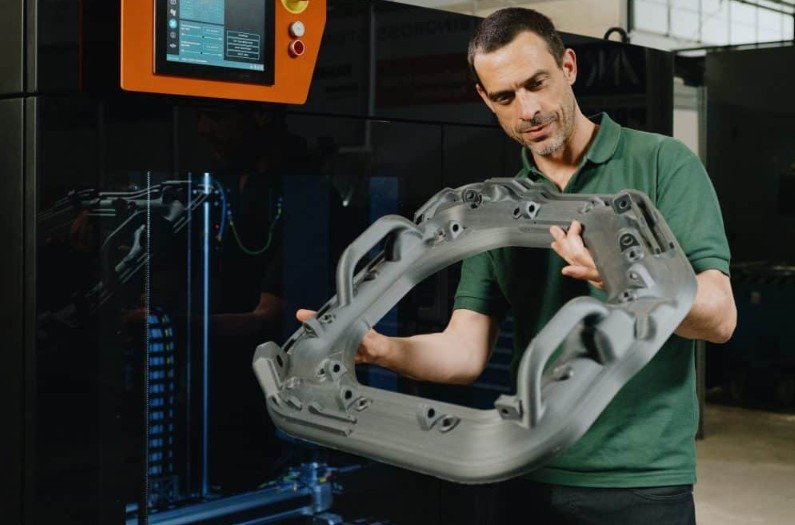
Imagine developing a new product and needing a functional prototype within a few days instead of waiting weeks for specialized tooling. With the right 3D printing technology, that goal can become a reality. Engineers can test designs, identify problems, make adjustments, and produce improved versions without restarting an expensive manufacturing process every time.
However, rapid manufacturing with 3D printing is not limited to prototyping. As printers, materials, and production workflows continue to improve, additive manufacturing is becoming a practical option for producing customized components, replacement parts, and even end-use products.
In this guide, we’ll explore how rapid manufacturing 3D printing works, its main benefits, the technologies available, and how businesses can decide whether it is the right solution for their production needs.
What Is Rapid Manufacturing 3D Printing?
Rapid manufacturing 3D printing refers to using additive manufacturing technology to produce physical components quickly from digital designs. Unlike traditional manufacturing processes that often involve cutting material away or shaping it with molds, 3D printing builds objects layer by layer.
The process usually begins with a computer-aided design (CAD) model. The model is converted into a format that a 3D printer can interpret, prepared using slicing software, and manufactured according to predefined printing parameters.
Depending on the technology, the printer may deposit melted plastic, cure liquid resin with light, or fuse powdered metal or polymer material.
The result is a physical object that can be inspected, tested, assembled, or used in a final product.
What makes rapid manufacturing particularly useful is the ability to move from a digital design to a physical part without creating dedicated tooling for every component. This can shorten development cycles and make low-volume production more economical.
For example, a manufacturer developing a custom machine bracket could print several design variations, test their fit, and select the best version before committing to a larger production run.
The key distinction is that rapid manufacturing focuses on producing usable parts efficiently, while rapid prototyping primarily focuses on testing and validating designs. Both approaches use similar technologies, but their requirements for durability, consistency, and quality assurance can differ.
How Does Rapid Manufacturing 3D Printing Work?
The process involves several connected steps, from preparing a digital model to inspecting the finished component.
1. Create a Digital Design
The first step is creating a three-dimensional model using CAD software. Engineers define the component’s dimensions, geometry, material requirements, and important functional features.
Designers may also optimize the model for additive manufacturing by incorporating internal channels, lightweight lattice structures, or complex shapes that would be difficult to produce using conventional methods.
A well-designed model can reduce printing time and material consumption while improving the component’s performance.
2. Prepare the Model for Printing
After the design is completed, it is imported into slicing software. The software divides the model into thin layers and generates instructions for the printer.
During this stage, the operator may select the layer thickness, print orientation, support structures, infill density, and other parameters.
These settings influence the final part’s surface finish, dimensional accuracy, strength, and production time.
For instance, a decorative component may benefit from finer layers for a smoother appearance. A functional bracket, on the other hand, may require a carefully selected orientation to improve strength in the direction of its expected load.
3. Select the Appropriate Material
Material selection depends on how the component will be used.
Common materials include PLA, ABS, PETG, nylon, engineering polymers, photopolymer resins, and metal powders. Each offers different properties related to strength, temperature resistance, flexibility, chemical resistance, and surface quality.
A simple display model may work well with an inexpensive plastic, while an industrial component exposed to heat or repeated mechanical stress may require an engineered polymer or metal alloy.
Material compatibility with the chosen printing technology is essential.
4. Print the Component
The 3D printer follows the prepared instructions to build the object layer by layer.
Printing time depends on the component’s dimensions, geometry, material, resolution, and machine capabilities. Some small parts can be produced in hours, while large or highly detailed components may take much longer.
Multiple parts can sometimes be printed in a single build, which can improve productivity when manufacturing small batches.
5. Finish and Inspect the Part
Once printing is complete, the component may require additional processing.
Depending on the technology, post-processing can include removing support structures, sanding, washing, curing, heat treatment, machining, or surface finishing.
Industrial applications may also require dimensional inspection, material testing, or mechanical testing to verify that the part meets its specifications.
These steps matter because a component that looks correct may still contain internal defects or fail to meet critical tolerances.
Main 3D Printing Technologies Used in Rapid Manufacturing
Different additive manufacturing technologies are suited to different production requirements.
Titanlayer | Impressão 3D FDM de Precisão
Fused Deposition Modeling (FDM)
FDM printers deposit melted thermoplastic filament through a nozzle, building parts layer by layer. The technology is popular for functional prototypes, fixtures, housings, and general-purpose components because equipment and materials can be relatively affordable.
Best suited for: affordable prototypes, tools, and many low-volume plastic parts.
Formlabs Grey V4 Resin | Formlabs Authorised Partner | 3D Printers Perth
Stereolithography (SLA)
SLA uses light to cure liquid photopolymer resin into solid shapes. It is useful when fine details and smooth surfaces are important, including product appearance models, dental models, and certain specialized components.
Best suited for: detailed prototypes and parts requiring a smooth finish.
Custom 3D Printing Services | Rapid Prototyping & Additive Manufacturing | FEIGEER TECH
Selective Laser Sintering (SLS)
SLS uses a laser to fuse powdered polymer material. It can produce complex geometries and interlocking parts, often without the same support structures required by some other printing processes.
Best suited for: complex polymer components and functional small-batch production.
Best Metal 3D Printers: DMLS, SLM, DED Guide | LaserSpecHub
Metal Additive Manufacturing
Processes such as laser powder bed fusion use a laser to selectively melt metal powder into a solid component. These technologies can create complex metal parts for demanding industrial applications, although equipment, materials, and quality controls can be expensive.
Best suited for: specialized metal components, lightweight structures, and complex geometries.
Choosing the right technology requires balancing cost, mechanical performance, dimensional accuracy, production volume, and post-processing requirements.
Key Benefits of Rapid Manufacturing 3D Printing
Businesses adopt additive manufacturing for several reasons. The most significant benefits often involve development speed, design flexibility, and the economics of producing specialized components.
Faster Product Development
Traditional manufacturing may require custom molds, dies, fixtures, or other tooling before production can begin. Depending on the process, preparing that tooling can take considerable time.
With 3D printing, manufacturers can often produce a physical part directly from a digital model. Engineers can test the component, identify design problems, and produce a revised version without waiting for new tooling.
This faster feedback loop can help companies bring products to market sooner.
For example, a startup developing a wearable device might print several enclosure designs to compare comfort, button placement, and internal component fit before finalizing the product.
Lower Initial Tooling Costs
Injection molding and other conventional production methods can be highly cost-effective at large volumes, but specialized tooling may require a significant upfront investment.
Additive manufacturing can reduce or eliminate that initial tooling expense for suitable components.
This advantage is particularly valuable for prototypes, customized products, spare parts, and small production runs.
However, 3D printing is not automatically cheaper for every part. Material costs, machine time, labor, and post-processing can make it more expensive than conventional manufacturing at higher production volumes.
Greater Design Freedom
Traditional manufacturing methods impose limitations on component geometry. A part may require several separate components, machining operations, or complex tooling to achieve a particular shape.
3D printing can produce intricate channels, lattice structures, internal cavities, and customized geometries that may be difficult or impossible to manufacture conventionally.
This flexibility allows engineers to consolidate assemblies, reduce part counts, and explore designs that would otherwise be impractical.
Reduced Material Waste
Because additive manufacturing builds components layer by layer, it can use material more efficiently than some subtractive processes that remove large amounts of material from a solid block.
This can be especially beneficial when producing expensive metal components or lightweight structures.
Still, waste is not eliminated entirely. Support structures, failed prints, unused powder that cannot be reused, and post-processing can all generate waste depending on the technology.
On-Demand Production
Manufacturers can store digital designs and print parts when they are needed instead of maintaining large inventories of every component.
This approach can help companies manage low-demand spare parts, replacement components, and products with unpredictable purchasing patterns.
For example, a maintenance department might print a suitable noncritical plastic cover or custom fixture when required rather than keeping dozens of versions in stock.
Critical safety components still require appropriate material validation, engineering approval, and quality assurance before they can be produced this way.
Applications of Rapid Manufacturing 3D Printing
Rapid manufacturing has applications across many industries, although each sector has different technical and regulatory requirements.
Professional 3D Printing Services | Source High-Quality 3D Printed Parts
Automotive Manufacturing
Automotive engineers use 3D printing for prototype housings, interior components, assembly fixtures, production aids, and selected end-use parts. It can help teams evaluate fit and function before investing in mass-production tooling.
Aerospace and Aviation
Additive manufacturing can produce complex lightweight structures, specialized brackets, and selected engine or aircraft components. Because failures can have serious consequences, aerospace applications require rigorous qualification and traceability.
Medical and Dental Products
Medical applications include anatomical models, dental models, surgical planning aids, and certain patient-specific devices. The materials and processes must meet the requirements appropriate to the intended clinical use.
Industrial Equipment
Factories can use printed jigs, fixtures, ergonomic handles, machine covers, and specialized tooling to improve production workflows. These items can often be customized without commissioning expensive dedicated tooling.
Consumer Products
Product developers can produce customized enclosures, accessories, household components, and limited-edition products. Rapid iteration also makes it easier to test different sizes, shapes, and ergonomic features.
Rapid Manufacturing 3D Printing vs. Traditional Manufacturing
Understanding how additive manufacturing compares with conventional production methods helps companies choose the right approach.
| Factor | 3D printing | Traditional manufacturing |
|---|---|---|
| Initial tooling | Often low for suitable parts | Can be high, depending on the process |
| Design changes | Usually relatively easy to implement | May require new tooling or process adjustments |
| Complex geometry | Often highly flexible | Can require specialized tools or multiple operations |
| High-volume production | May be slower or more expensive per part | Often more economical with suitable processes |
| Material selection | Depends on the printing technology | Often offers a broad range of established materials and processes |
| Surface finish | May require additional finishing | Can provide excellent finishes depending on the method |
| Customization | Often economical for one-off variations | Can become expensive when every part differs |
The two approaches are not necessarily competitors. Many manufacturers use them together.
For example, a company may use 3D printing to develop a prototype and create production fixtures, then switch to injection molding when demand reaches a volume that justifies the tooling investment.
This hybrid strategy combines the flexibility of additive manufacturing with the productivity of conventional manufacturing.
How Much Does Rapid Manufacturing 3D Printing Cost?
The cost of rapid manufacturing 3D printing depends on the technology, material, size, geometry, production quantity, and finishing requirements.
A small plastic prototype produced on a desktop FDM printer may cost only a modest amount in material, while a large industrial component printed in engineering polymer or metal can cost considerably more.
Important cost factors include:
-
Material consumption: Specialized polymers, resins, and metal powders can be expensive.
-
Machine time: Larger or more detailed parts generally take longer to print.
-
Labor: Design preparation, machine operation, setup, and inspection add costs.
-
Post-processing: Washing, curing, machining, heat treatment, or finishing may be necessary.
-
Quality requirements: Tight tolerances, documentation, and testing increase the total cost.
-
Production quantity: Printing many parts together can improve efficiency, but the economics depend on the machine and part design.
When comparing 3D printing with traditional manufacturing, calculate the total cost per acceptable part rather than considering material costs alone.
For production runs involving thousands of identical components, injection molding or another conventional method may be more economical. For customized parts or small batches, 3D printing may offer better overall value.
Challenges and Limitations of 3D Printing in Manufacturing
Although rapid manufacturing offers many advantages, it is not the ideal solution for every production problem.
Production Speed at Scale
A printer may produce a complex part without custom tooling, but it may not match the output of a high-speed conventional production line.
When thousands of identical components are required, the time needed to print each batch can become a significant limitation.
Material and Mechanical Properties
Printed components can have properties that differ from conventionally manufactured parts made from similar materials.
For some processes, layer orientation affects strength. Porosity, residual stresses, surface defects, and thermal history may also influence performance.
Engineers must select suitable materials and validate parts for their intended loads, temperatures, and operating environments.
Dimensional Accuracy and Surface Quality
Certain printing technologies can produce highly detailed components, but accuracy varies with the machine, material, design, and process settings.
Parts requiring precise fits may need machining or additional finishing after printing.
Quality Control and Repeatability
Producing one successful part does not automatically guarantee that every subsequent part will meet the same specifications.
Industrial production may require process monitoring, calibrated equipment, validated procedures, dimensional inspection, and material testing.
These measures are particularly important for aerospace, medical, automotive safety, and other applications where component failure carries substantial risks.
How to Choose the Right Rapid Manufacturing 3D Printing Method
The best method depends on what the component must accomplish and how many parts are needed.
Start by defining the part’s function. Does it need to withstand mechanical stress, resist high temperatures, maintain precise dimensions, or simply demonstrate an appearance concept?
Next, estimate the production quantity and timeline. A one-off prototype has different economic requirements from a production run of several hundred components.
Then compare suitable technologies and materials. FDM may be appropriate for inexpensive prototypes and fixtures, SLA for fine details, SLS for complex polymer components, and metal additive manufacturing for selected high-performance applications.
Finally, evaluate the entire workflow, including design preparation, printing, post-processing, inspection, and delivery.
A successful manufacturing decision considers the complete production process rather than the printer alone.
The Future of Rapid Manufacturing 3D Printing
Rapid manufacturing continues to develop as printers become more capable and manufacturers improve their digital production workflows.
Several trends are shaping its future.
Automation and connected production: Automated material handling, machine monitoring, and digital production management can help manufacturers improve throughput and repeatability.
AI-assisted design: Generative design and optimization tools can help engineers explore geometries that reduce weight, consolidate components, or improve performance.
Advanced materials: Research into high-performance polymers, metal alloys, and specialized composite materials is expanding the range of potential applications.
Distributed manufacturing: Digital design files can allow suitable components to be produced closer to where they are needed, potentially reducing lead times and transportation requirements.
Hybrid manufacturing: Combining additive manufacturing with machining, molding, and other established methods can create more flexible production systems.
These developments do not mean that 3D printing will replace every traditional manufacturing process. Instead, the technology is likely to become an increasingly useful part of a broader manufacturing toolkit.
Frequently Asked Questions
Is rapid manufacturing the same as 3D printing?
Not exactly. Rapid manufacturing is a broader approach to producing parts quickly, and 3D printing is one technology used to achieve it. Other rapid manufacturing methods may include rapid tooling and specialized digital production techniques.
Can 3D printing be used for mass production?
Yes, in selected applications. However, the suitability depends on part complexity, production volume, machine capacity, material requirements, and cost per component. Conventional manufacturing may remain more economical for large volumes of simple, identical parts.
Is a 3D-printed part strong enough for industrial use?
It can be, provided the correct material, printing process, design, and quality controls are selected. Strength varies significantly between technologies and materials, so functional or safety-critical components should be validated for their intended use.
What industries benefit most from rapid manufacturing?
Industries that value customization, complex geometry, shorter development cycles, or low-volume production can benefit substantially. Examples include aerospace, automotive, medical devices, dental products, industrial equipment, and specialized consumer goods.
Does rapid manufacturing reduce waste?
It can reduce material waste compared with certain subtractive manufacturing methods. However, the overall environmental impact also depends on energy consumption, material production, failed prints, support structures, post-processing, and whether parts can be recycled.
Final Thoughts
Rapid manufacturing 3D printing gives businesses a flexible way to turn digital designs into physical components without always relying on expensive tooling or lengthy production preparation.
Its major advantages include faster product development, design flexibility, on-demand production, and the ability to manufacture specialized parts in relatively small quantities. At the same time, production speed, material properties, quality assurance, and total cost must be evaluated carefully.
For companies exploring modern manufacturing technologies, the most effective approach is to identify a specific production challenge and determine whether additive manufacturing offers a measurable advantage.
When used for the right applications, rapid manufacturing 3D printing can shorten development cycles, support innovation, and help manufacturers produce complex or customized components more efficiently.